
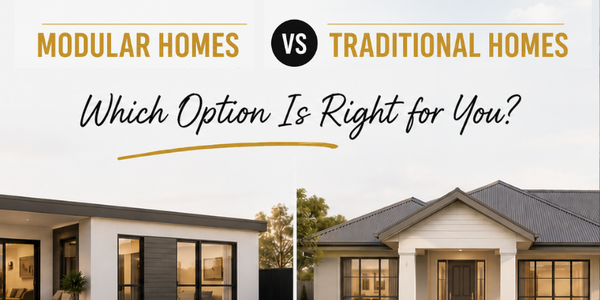
MODULAR HOMES VS TRADITIONAL HOMES

Modular Homes vs Traditional Homes: Which Option Is Right for You?
If you're planning to build a new home, you've likely come across the growing popularity of modular homes. Once considered a niche option, modular construction has evolved significantly, offering stylish designs, improved build quality and faster construction times.
But how do modular homes compare with a traditional brick-and-mortar build? The answer depends on your budget, timeframe, lifestyle and long-term goals.
Let's take a closer look at the advantages and considerations of each.
What Is a Modular Home?
A modular home is built in sections, or "modules", inside a controlled factory environment before being transported to the building site and assembled on permanent foundations.
Unlike transportable homes or caravans, modern modular homes are permanent dwellings that must comply with the same Australian Building Codes and local planning requirements as traditionally built homes.
What Is a Traditional Home?
A traditional home is constructed entirely on-site using conventional building methods. This typically involves laying the slab, framing, roofing and completing the home over several months, with trades working sequentially on the property.
This has been the most common method of residential construction throughout Australia for decades.
Build Time
One of the biggest advantages of modular construction is speed.
Because modules are built indoors while site preparation occurs simultaneously, the overall construction process is often significantly shorter than a traditional build.
A traditional home can take many months to complete, particularly if weather, labour shortages or material delays occur.The current average build time for project homes in Western Australia is 8-12 months. For custom built homes it is 10-18 months and for large, architecturally designed homes, it is 12-24 months. The average build time for a modular home in Australia is generally 4–8 months.
For buyers looking to move in sooner or investors wanting to generate rental income earlier a shorter build time can be a significant advantage.
Quality Control
Factory-built homes benefit from a controlled construction environment.
Materials are protected from rain and extreme weather during construction, and consistent manufacturing processes often result in high levels of quality control.
Traditional homes are also capable of exceptional quality, particularly when built by reputable builders. However, on-site construction is naturally more exposed to weather interruptions and varying site conditions.
Regardless of which option you choose, selecting an experienced and reputable builder remains one of the most important decisions you'll make.
Design Flexibility
Traditional homes generally offer the greatest flexibility when it comes to customisation.
Complex floor plans, unusual rooflines, split-level designs and bespoke architectural features are often easier to achieve through conventional construction.
Modular homes have also come a long way, with many manufacturers now offering a wide range of layouts, finishes and upgrade options. While some design limitations remain due to transport requirements, many buyers are surprised by the level of customisation available.
Cost Considerations
Budget is naturally a major factor for most home builders.
Modular homes can provide excellent value, particularly where efficient construction processes reduce labour costs and minimise delays.
However, it's important to compare complete project costs not just the advertised price of the home.
Additional expenses may include:
Site preparation
Earthworks
Delivery and crane installation
Utility connections
Landscaping
Driveways and fencing
Council approvals
These costs can also apply to traditional homes, so obtaining a comprehensive quote is essential before making comparisons.
Energy Efficiency
Both modular and traditional homes can achieve excellent energy performance.
Many modern modular builders incorporate high-performance insulation, double glazing and sustainable construction techniques into their standard specifications.
Likewise, traditional homes can be designed to maximise natural light, ventilation and thermal performance.
Whichever option you choose, investing in energy-efficient features can reduce running costs and improve year-round comfort.
Finance and Insurance
Financing a modular home can differ slightly from a traditional build.
Some lenders have specific lending requirements depending on the construction method and payment schedule. It's worth speaking with your lender or mortgage broker early in the process to understand how progress payments and approvals will work.
Insurance requirements may also vary during construction, so it's important to discuss this with both your builder and insurer.
Which Is Better for Investors?
For property investors, modular homes can be particularly attractive due to their shorter construction time and the potential to have a property tenanted sooner.
They're also worth considering for:
Granny flats
Ancillary dwellings
Regional developments
Holiday accommodation
Secondary income opportunities
Traditional homes may still be the preferred choice where larger family homes, premium finishes or unique architectural designs are likely to achieve stronger resale values.
The best option depends on your investment strategy, location and target market.
Questions to Ask Before Choosing a Builder
Regardless of the construction method, it's worth asking:
What is included in the quoted price?
What is excluded?
What warranties are provided?
What is the estimated construction timeframe?
What happens if delays occur?
Can I inspect completed homes?
What upgrade options are available?
What after-sales support is offered?
Taking the time to compare builders, not just prices, can help avoid unexpected costs and ensure you're making an informed decision.
Final Thoughts
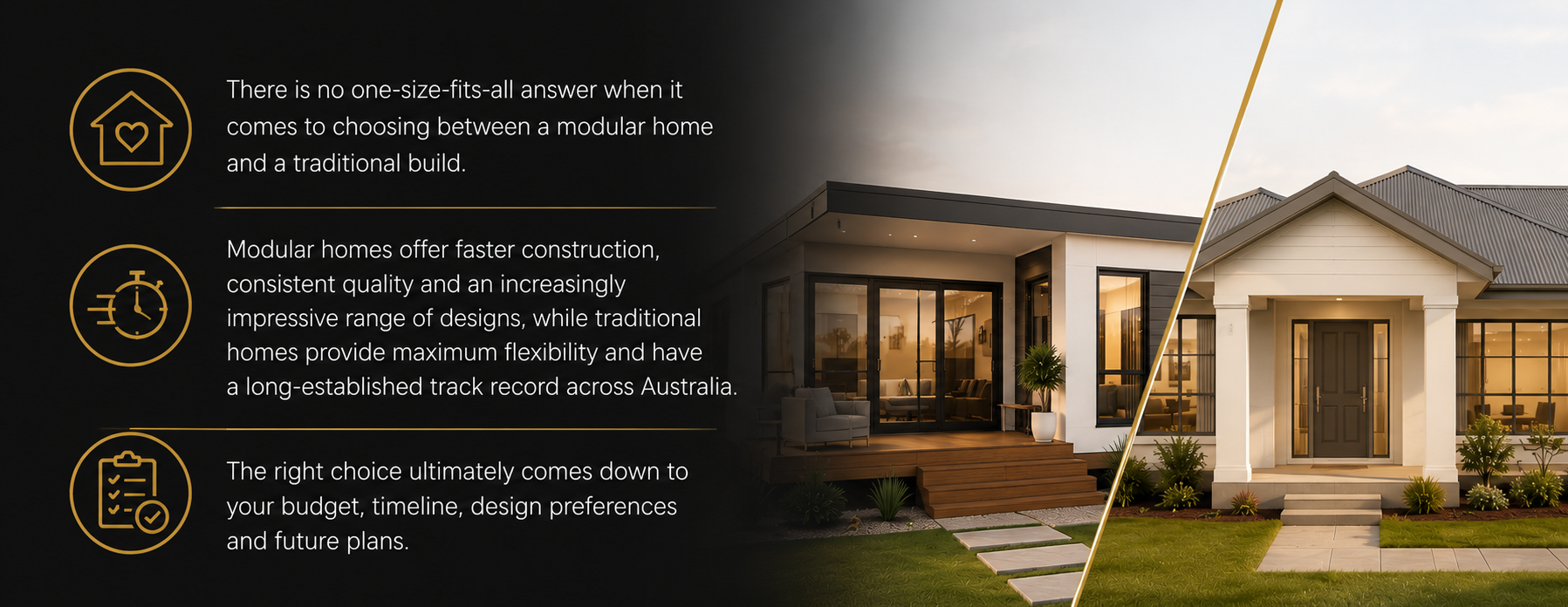
There is no one-size-fits-all answer when it comes to choosing between a modular home and a traditional build.
Modular homes offer faster construction, consistent quality and an increasingly impressive range of designs, while traditional homes provide maximum flexibility and have a long-established track record across Australia.
The right choice ultimately comes down to your budget, timeline, design preferences and future plans.
The Umbrella Realty Difference
Whether you're purchasing vacant land, planning your dream home or exploring investment opportunities, the team at Umbrella Realty is here to help. We can provide local market insights, discuss which property types are in demand across Bunbury and the South West, and help you make informed decisions that align with your long-term goals.
You might also be interested in
Jul 1, 2026
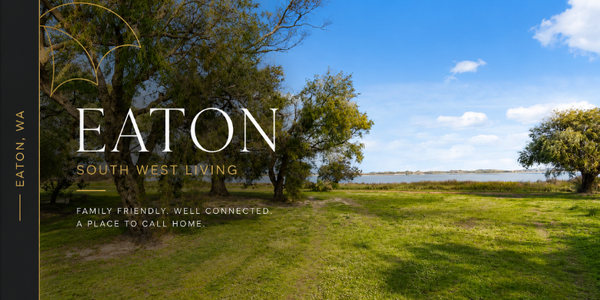
NEIGHBOURHOOD SPOTLIGHT: EATON
Eaton, WA: Riverside Living with Everyday Convenience Nestled on the banks of the Collie River, Eaton has grown into one of the South West's most desirable suburbs. Combining a relaxed lifestyle with

Jul 1, 2026
WHY HAVING AN EMERGENCY AND MAINTENANCE FLOAT MAKES FINANCIAL SENSE
Why Having an Emergency and Maintenance Float Makes Financial Sense Owning an investment property is a long-term wealth-building strategy, but like any investment, it comes with ongoing responsibilit